1. Motor thermal protector tripped.
a. Incorrect control box.
b. Incorrect or faulty electrical connections.
c. Faulty thermal protector.
d. Low voltage.
e. Ambient temperature of control box/starter too high.
f. Pump bound by foreign matter.
g. Inadequate submergance.
2. Open circuit breaker or blown fuse.
3. Power source inadequate for load.
4. Power cable insulation damage
5. Faulty power cable splice
1. Allow motor to cool, thermal protector will automatically reset.
a-e. Have a qualified Monticello Pump Services technician inspect and repair, as required.
f. Pull pump, clean, adjust set depth as required.
g. Confirm adequate unit submergence in pumpage.
2. Have a qualified Monticello Pump Services technician inspect and repair as required.
3. Check supply or generator capacity.
4–5. Have a qualified Monticello Pump Services technician inspect
and repair as required.
1. Faulty or incorrectly installed check valve.
2. Pump air bound.
3. Lift too high for pump.
4. Pump bound by foreign matter.
5. Pump not fully submerged
6. Well contains excessive amounts of air or gas
7. Excessive pump wear.
8. Incorrect motor rotation – three phase only.
1. Inspect check valve, repair as required.
2. Successively start and stop pump until flow is delivered.
3. Review unit performance, check with dealer.
4. Pull pump, clean, adjust set depth as required.
5. Check well recovery, lower pump if possible.
6. If successive starts and stops does not remedy, well contains excessive air or gases.
7. Pull pump and repair as required.
8. Reverse any two motor electrical leads.
The pressure switch is not set correctly.
The water level too low in well for rating of pump.
The switch opening is clogged.
Revise the settings: 20-lb cut-in, 40-lb cut-out; or 30/50 (depending on tank size).
Pressure switch not set correctly. Check pump setting.
Clean out openings or, if necessary replace switch.
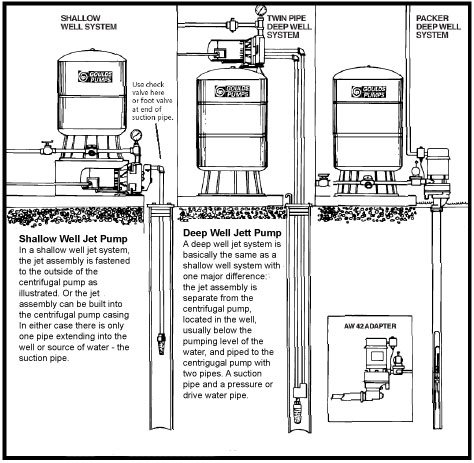
Pump starts too often, runs too long
Check to see if the valve leaks.
The pressure switch is out of adjustment.
There are leaks in the pipe.
Any or all of the above All known causes are checked but system still won’t work properly.
You have a water-logged tank (loss of air pressure). Check tanks for leaks. Re-charge with air pressure to proper level. Check air volume control.
Replace or repair.
Adjust to proper setting and check to assure setting remains. If not, replace pressure switch.
Check above-ground piping for leaks. if none, pull pump and check all pipe connections and connection of pipe to pump.
Call Monticello Pump Services 1-540-210-0886 or540-202-2054
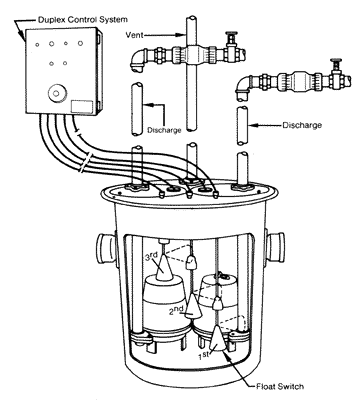
A. Pump will not start or run
B. Motor overheats and trips overload or blows fuse
C. Pump starts and stops too often
D. Pump will not shut off
E. Pump operates but delivers little or no water
F. Drop in head and/or capacity after period of use
Check fuse, low voltage, overload open, open or incorrect wiring, open switch, impeller or seal bound mechanically, defective capacitor or relay when used, motor or wiring shorted. Float assembly held down. Switch defective, damaged, or out of adjustment.
Incorrect voltage, negative head (discharge open lower than normal) impeller or seal bound mechanically, defective capacitor or relay, motor shorted.
Float tight on rod, check valve stuck or none installed in long distance line, overload open, level switch(s) defective, sump pit too small.
Debris under float assembly, float or float rod bound by pit sides or other, switch defective, damaged or out of adjustment.
Check strainer housing, discharge pipe, or if check valve is used vent hole must be clear. Discharge head exceeds pump capacity. Low or incorrect voltage. Incorrect motor rotation. Capacitor defective. Incoming water containing air or causing air to enter pumping chamber.
Increased pipe friction, clogged line or check valve. Abrasive material and adverse chemicals could possibly deteriorate impeller and pump housing. Check line. Remove base and inspect.
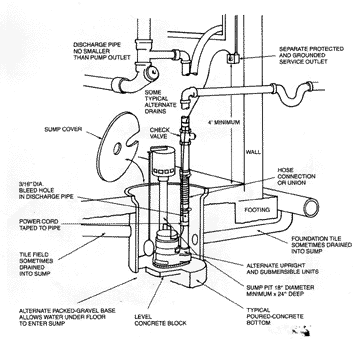

1. Inspect and test the system for proper operations at least every 3 months.
2. Plug the control charger and the primary pump into the wall outlet.
3. Battery should be agitated gently every 3 months. Caution
Batter acid is dangerous. Take proper safety precautions. Do not splash the acid. Add distilled water to battery when necessary per battery manufacturer’s instructions.
TROUBLESHOOTING INFORMATION
1. Charging and charged LED’s alternate frequently
2. DC Pump won’t run
3. Pumps runs but pumps very little or no water.
4. Pump cycles too frequently
5. Float switch in “on” position. Pump won’t run.
6. Pump runs, but pumps water intermittently
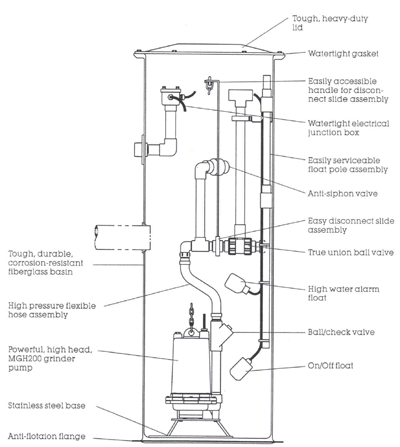

A. Pump will not start or run
B. Motor overheats and trips overload or blows fuse
C. Pump starts and stops too often
D. Pump will not shut off
E. Pump operates but delivers little or no water
F. Drop in head and/or capacity after period of use
Check fuse, low voltage, overload open, open or incorrect wiring, open switch, impeller or seal bound mechanically, defective capacitor or relay when used, motor or wiring shorted. Float assembly held down. Switch defective, damaged, or out of adjustment.
Incorrect voltage, negative head (discharge open lower than normal) impeller or seal bound mechanically, defective capacitor or relay, motor shorted.
Float tight on rod, check valve stuck or none installed in long distance line, overload open, level switch(s) defective, sump pit too small.
Debris under float assembly, float or float rod bound by pit sides or other, switch defective, damaged or out of adjustment.
Check strainer housing, discharge pipe, or if check valve is used vent hole must be clear. Discharge head exceeds pump capacity. Low or incorrect voltage. Incorrect motor rotation. Capacitor defective. Incoming water containing air or causing air to enter pumping chamber.
Increased pipe friction, clogged line or check valve. Abrasive material and adverse chemicals could possibly deteriorate impeller and pump housing. Check line. Remove base and inspect.